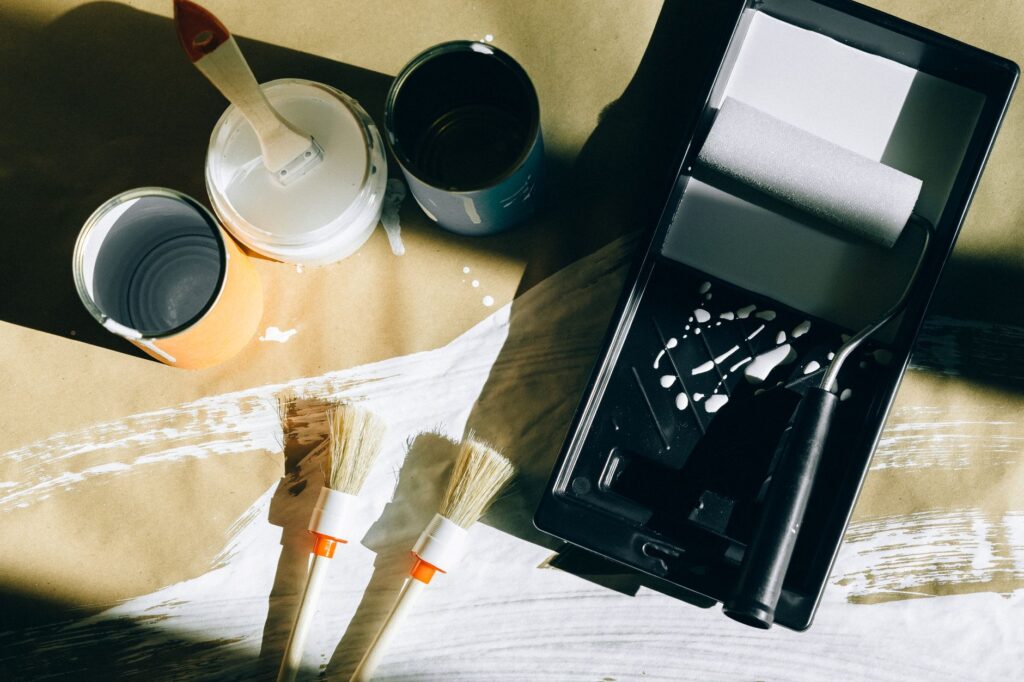
The right colours and finishes make a bigger difference to how a home feels than almost any other renovation for the money. This guide brings together our interior painting ideas and colour guides: how to choose a colour scheme, what works in each room, which sheen to use where, and how to test colours before you commit.
Budgeting for the job? See our interior painting cost guide or get an instant estimate with our painting cost calculator.
Start with the light
In Australia, north-facing rooms get the most sun and warm light, so cooler colours stay fresh there. South-facing rooms get softer, cooler light, and warmer whites and neutrals stop them feeling flat or grey. Always look at colours in the room itself, morning and evening, before deciding.
Popular colour schemes for Australian homes
- Warm whites and soft neutrals — the most versatile base for open-plan living and resale; warm whites suit south-facing rooms.
- Earthy tones — muted greens, clay, terracotta and ochre sit well with timber floors and natural light.
- Coastal palettes — soft blues, sandy neutrals and crisp whites, especially in bright, north-facing homes.
- Moody accents — deep navy, charcoal or forest green on a single feature wall, study or powder room.
- Tone-on-tone — several shades of one colour across walls, trim and ceiling for a calm, designed look.
Room-by-room ideas
Living areas. Keep large open-plan spaces to one light, warm base colour so they flow, and add depth with a feature wall or a darker shade in a nook.
Bedrooms. Soft, muted colours such as greige, dusty blue or sage feel restful. A darker wall behind the bed adds depth without closing the room in.
Kitchens. Choose washable, stain-resistant paint. Light walls keep the space bright; colour can go on cabinetry or an island instead.
Bathrooms and laundries. Use mould-resistant paint made for wet areas. Pale colours make small bathrooms feel larger; darker tones suit powder rooms.
Hallways. High-traffic walls need a durable, washable finish. A slightly deeper colour hides scuffs better than pure white.
Kids’ rooms. Washability matters more than colour. Painting only the lower half in a stronger colour is easy to update as they grow.
Techniques worth trying
- Feature walls — pick the wall your eye goes to first, usually behind the bed or the main sofa.
- Two-tone walls — a darker lower section with a lighter upper, split at dado or door-head height.
- Colour drenching — walls, trim and ceiling in one colour, which works especially well in small rooms.
- Painted ceilings — a pale tint of the wall colour instead of stark white softens a room.
- Painted doors and trim — a contrasting colour on internal doors adds character for little cost.
Which paint finish to use where
- Flat or matte — ceilings and low-traffic walls; hides imperfections but marks more easily.
- Low sheen — the go-to for living areas, bedrooms and hallways; washable and forgiving.
- Semi-gloss — kitchens, bathrooms and laundries, where you need to wipe walls often.
- Gloss enamel — doors, skirting and architraves; tough, but shows every flaw, so prep matters.
Test before you commit
Buy sample pots and paint large swatches, or paint sample boards you can move around the room. Check them in daylight and at night under your own lighting, next to your floors, furniture and trim. Colours almost always look stronger on the wall than on a chip, so many people go a shade lighter than their first choice.
Common mistakes to avoid
- Choosing colours from a small chip under shop lighting.
- Using too many competing colours in open-plan spaces.
- Putting flat paint in kitchens, bathrooms or hallways.
- Pairing a cool white trim with warm walls, or the reverse.
- Skipping prep: colour won’t hide cracks, stains or poor patching.
FAQ
What colour makes a room look bigger?
Light, warm neutrals and soft whites, ideally with the ceiling in the same or a slightly lighter shade, make rooms feel larger.
Should the ceiling be white?
Not necessarily. A flat ceiling white is the safe choice, but a pale tint of the wall colour gives a softer, more finished look.
Which colours help resale?
Warm whites and light neutrals appeal to the most buyers; keep bolder colours for easily repainted feature walls.